Giving the Odra a Voice: The Fight for a River’s Rights. How a grassroots movement in Poland is bringing the rights of a river into public debate and national law.

Agata Foksa-Biegaj
19 oktober 2026Dit artikel is Engelstalig.
Geschreven door: Agata Foksa-Biegaj
A disaster that changed the conversation
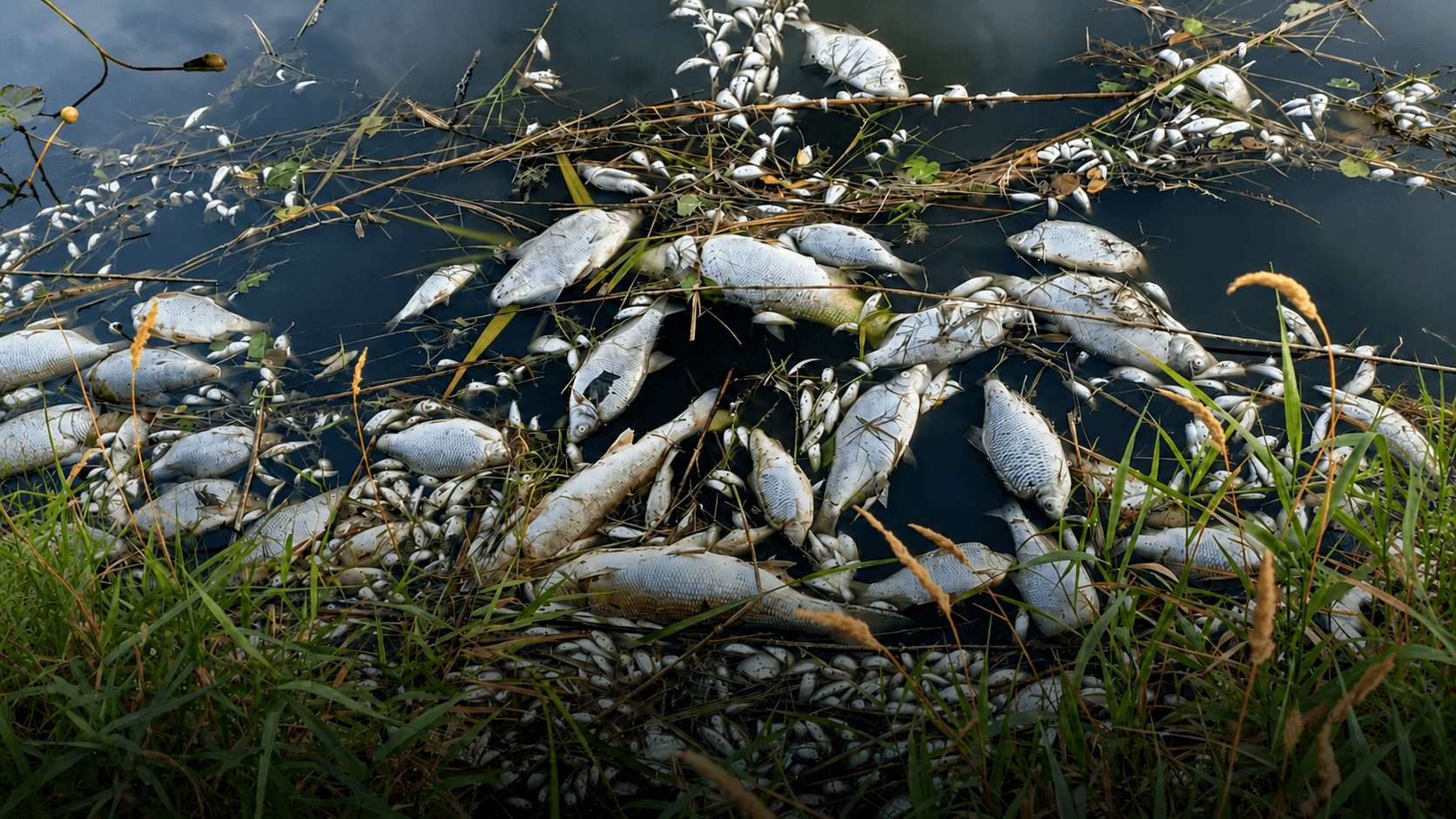
In the summer of 2022, the Odra River, which flows through the Czech Republic, Poland and Germany, suffered a devastating ecological disaster. Researchers estimated that around 65 million mussels, 147 million freshwater snails and 1,650 tonnes of fish died along a 560-kilometre stretch of the river.[1]
The disaster was associated with a toxic bloom of Prymnesium parvum, commonly known as golden algae. High salinity, warm temperatures and low water levels created favourable conditions for the bloom, while saline mine water discharged into the river contributed to the problem.[2]
The catastrophe exposed the limits of existing environmental protections. For many people, it became clear that restoring the Odra would require more than returning to business as usual.
A movement grows around the river
The response took many forms. People organised, created, walked and found new ways to bring others closer to the river.
I was born in Wrocław, a city shaped by the Odra. Some of my earliest memories are of walking along its banks with my late godfather. For me, the river is not an abstraction or simply a natural resource. It is part of the landscape in which my life began. Many people have their own relationship with the Odra, shaped by the places where they live, work and spend time with their families.
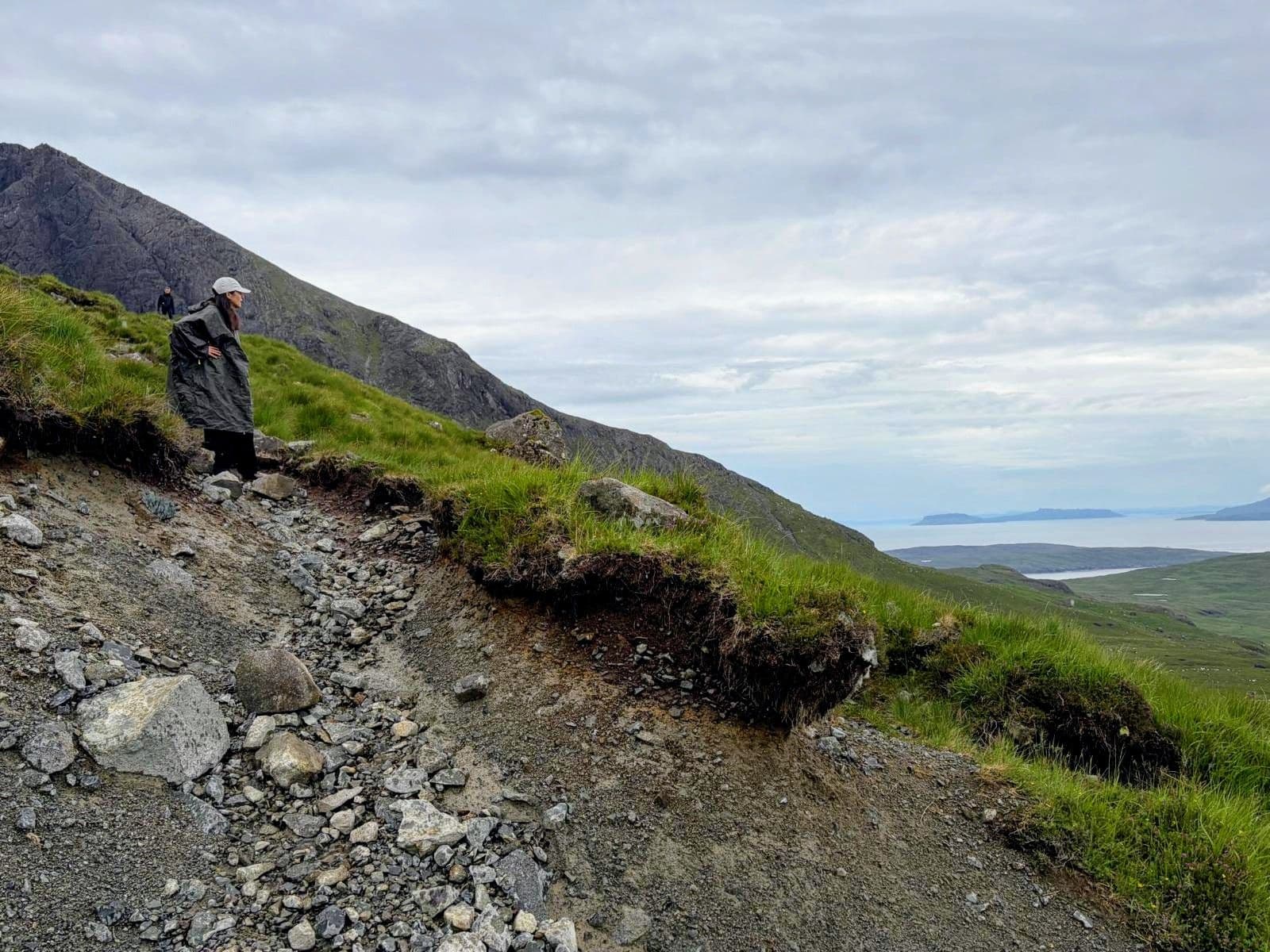
In April 2023, the Great March for the Odra set off from the river’s source in the Czech Republic. Over 44 days, participants covered 937 kilometres towards the Baltic Sea. A total of 233 people formally registered, while others joined along the way. The march included a demonstration in Wrocław and ended in Stepnica, near the river’s mouth.[3] The march brought people into direct contact with the river and made its condition a shared public concern.
In early 2024, our action Przepływy dla Odry (Flows for the Odra) offered another way to connect people with the river. Over 50 days, writers, artists, scientists, musicians and activists shared 50 stories, poems, essays and other creative works. Among the contributors was Nobel Prize-winning writer Olga Tokarczuk.[4]
Together, these initiatives helped build a movement rooted in people’s relationships with the river.
From public support to Parliament
The next challenge was to translate public concern into legal change.
In 2025, a citizens’ legislative initiative calling for legal personhood for the Odra collected 92,998 valid signatures, just short of the 100,000 required to submit a citizens’ bill directly to Parliament. Signatures were gathered at 147 collection points and during more than 230 events. The campaign also received support from scientists, universities and research institutions.[5]
The initiative did not end there. Members of Parliament took the proposal forward, and its first reading began in the Polish Sejm on 25 March 2026. The proposal faced strong opposition, particularly from right-wing MPs. At times, the debate focused less on the bill’s legal arguments than on dismissing the proposal and portraying environmental activists as a threat to economic development and public authority.[6] On 27 March, a motion to reject the bill at its first reading was defeated by 210 votes to 195, with 28 abstentions. The bill was referred to parliamentary committees and remains under consideration.[6]
The process showed that turning public concern into legal change requires sustained engagement and persistence.
What would it mean for the Odra to have rights?
Legal personhood would not make the river human. It would give the Odra a legal status through which its interests could be represented and defended.
The proposed law sets out rights connected to the river’s existence as an ecosystem, including its natural flow, biodiversity and capacity to regenerate.[7] The aim is to ensure that decisions affecting the river take its own interests into account, rather than treating it solely as a resource for human use.
There are precedents elsewhere. New Zealand recognised the Whanganui River as a legal person in 2017; Colombia recognised the Atrato River as a subject of rights that same year; and Spain granted legal personality to the Mar Menor lagoon in 2022.[8] These examples show that recognising nature’s rights is already being explored in different legal systems.
At its heart, the movement challenges a familiar assumption: that nature should be protected mainly because it is useful to humans.
It asks whether the law can also recognise the interests of the living systems on which we depend.
From the Odra to Europe
The movement to recognise the Odra’s rights is part of a growing international effort to give nature a voice in law.
On 19 May 2026, the European Commission registered the European Citizens’ Initiative Rights for Nature: Empower Citizens to Represent and Protect Ecosystems. Its signature collection began on 13 October 2026. The initiative aims to gather one million signatures across the European Union within 12 months, meeting the required national thresholds in at least seven member states.[9]
The Odra’s story is far from over. The question is no longer just how to protect the river, but whether the river itself should have a voice in the decisions that shape its future.
Sources
[1] Szlauer-Łukaszewska et al. (2024), “Quantifying a mass mortality event in freshwater wildlife within the Lower Odra River,” Science of the Total Environment, 907, 167898.https://doi.org/10.1016/j.scitotenv.2023.167898
[2] Supreme Audit Office of Poland (NIK), “Golden algae: a small seaweed which exposed incompetency of a big state” (2023).https://www.nik.gov.pl/en/news/golden-alga-a-small-seaweed-which-exposed-incompetency-of-a-big-state.html
[3] Osoba Odra, “Idea Marszu.”https://osobaodra.pl/marsz/
[4] Osoba Odra, “Przepływy dla Odry: Maraton 50 opowieści.”https://osobaodra.pl/przeplywy-dla-odry-opowiesci/
[5] Osoba Odra, citizens’ initiative FAQ.https://ustawa.osobaodra.pl/faq/
[6] Polish Sejm, first-reading debate and vote on the proposed Odra River legal-personhood bill, 25–27 March 2026.https://www.sejm.gov.pl/Sejm10.nsf/PrzebiegProc.xsp?nr=2082
[7] Proposed Act on the Legal Personhood of the Odra River.https://ustawa.osobaodra.pl/
[8] New Zealand, Te Awa Tupua (Whanganui River Claims Settlement) Act 2017.https://www.legislation.govt.nz/act/public/2017/7/en/latest/sections/DLM6831754/
[9] European Commission, registration of new European Citizens’ Initiatives, 19 May 2026.https://citizens-initiative.europa.eu/news/two-new-citizens-initiatives-2026-05-19_en
Reflectie van de stichting
De beweging rond de Odra laat zien hoe Rechten van de Natuur op steeds meer plekken in Europa vorm krijgt. Van Polen tot Spanje en Nederland zetten mensen zich in om ecosystemen een eigen plek te geven in het recht. Elk initiatief heeft zijn eigen geschiedenis en aanpak, maar samen vormen ze een steeds sterker internationaal netwerk.
Met het Europees burgerinitiatief Rights for Nature (ECI) bundelen we die krachten. Door lokale en nationale initiatieven met elkaar te verbinden, kennis en ervaringen te delen en gezamenlijk op te trekken, werken we aan erkenning van Rechten van de Natuur op Europees niveau.
Sinds 13 oktober 2026 kunnen EU-burgers die de kiesgerechtigde leeftijd voor Europese verkiezingen hebben bereikt het burgerinitiatief ondertekenen. Met één miljoen handtekeningen uit ten minste zeven EU-landen willen we de Europese Commissie oproepen om met wetgeving te komen die de rechten van de natuur erkent.
Ook tekenen? Klik hier
Laatste nieuws
Blijf op de hoogte van de laatste ontwikkelingen op het gebied van Rechten van de Natuur in Nederland en daarbuiten. En ontdek hoe jij kunt meedoen.